
AI Trends Small Business Owners Should Actually Pay Attention To
Artificial intelligence is no longer just a futuristic concept, it’s a practical tool that small businesses are using every day to save time, reduce costs, and improve customer experience. While there are many emerging AI innovations, not all of them are relevant or necessary for small business owners.
The key is knowing which trends actually deliver real-world value.
In this guide, we’ll break down the AI trends small business owners should focus on in 2026, trends that are accessible, cost-effective, and impactful.
Why AI Matters for Small Businesses Today?
Small businesses often operate with limited time, staff, and resources. AI helps bridge that gap by:
Automating repetitive tasks
Improving response times
Enhancing decision-making
Supporting marketing and content creation
Increasing overall efficiency
Instead of replacing teams, AI works alongside them to improve productivity and scalability.
1. AI Automation for Everyday Tasks
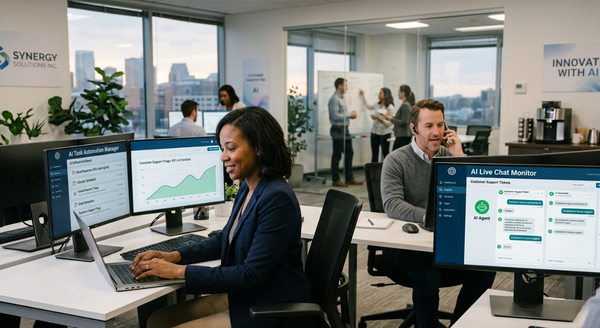
One of the most practical AI trends is automation of repetitive tasks.
AI can now handle:
Responding to emails
Scheduling appointments
Managing follow-ups
Organizing data
Handling basic customer inquiries
This allows business owners and teams to focus on higher-value activities such as strategy, sales, and customer relationships.
2. AI-Powered Customer Support
Customers expect fast, reliable responses. AI-powered support tools help businesses meet that expectation without increasing staffing costs.
These systems can:
Answer frequently asked questions
Provide instant replies 24/7
Assist with bookings or orders
Escalate complex issues to human staff
By reducing wait times, businesses can improve customer satisfaction and retention.

3. AI Phone Agents for Call Handling
AI phone agents are becoming increasingly useful for businesses that receive a high volume of calls.
They can:
Answer incoming calls instantly
Respond to common questions (hours, pricing, services)
Capture lead information
Send summaries via text or email
Route important calls to the right person
This ensures no missed opportunities while reducing the burden on staff.
4. AI for Content Creation and Marketing
Content marketing remains essential, but it can be time-consuming. AI helps streamline the process by assisting with:
Blog writing
Social media captions
Email newsletters
Ad copy
Content planning and ideation
For small businesses without dedicated marketing teams, AI acts as a powerful assistant that helps maintain consistency and output.
5. AI-Powered Personalization
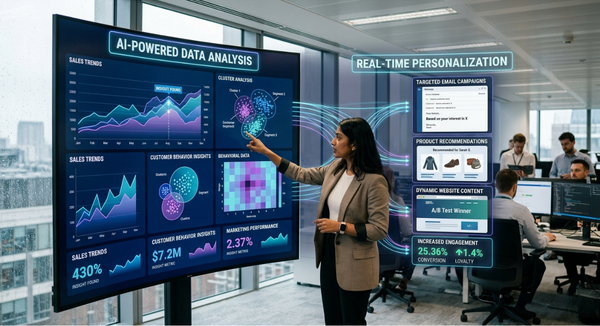
Personalization is no longer optional, it’s expected. AI enables businesses to deliver tailored experiences based on customer behavior and preferences.
Examples include:
Personalized email campaigns
Product or service recommendations
Targeted promotions
Dynamic website content
This helps increase engagement, conversions, and customer loyalty.
6. AI for Data Analysis and Insights
Many businesses collect data but struggle to use it effectively. AI simplifies this by analyzing data quickly and identifying patterns.
AI can help uncover:
Sales trends
Customer behavior insights
Marketing performance metrics
Operational inefficiencies
With these insights, business owners can make more informed, data-driven decisions.

7. AI Integration Across Business Tools
Another important trend is the integration of AI across existing systems. Instead of using isolated tools, businesses are connecting AI with their current software ecosystem.
Common integrations include:
CRM platforms
Email systems
Scheduling tools
E-commerce platforms
Project management tools
This creates a more streamlined workflow and reduces manual data entry.
8. AI for Workflow Optimization
AI is increasingly being used not just to complete tasks, but to improve how work is done.
It can:
Identify bottlenecks in processes
Suggest workflow improvements
Prioritize tasks
Improve team coordination
This leads to more efficient operations and better resource allocation.
9. AI Assistants for Daily Productivity
AI assistants are becoming everyday tools for business owners and teams.
They can help with:
Writing and editing documents
Summarizing information
Brainstorming ideas
Managing tasks
Answering quick questions
These assistants reduce the time spent switching between tools and help maintain focus on core responsibilities.
10. Ethical and Responsible Use of AI
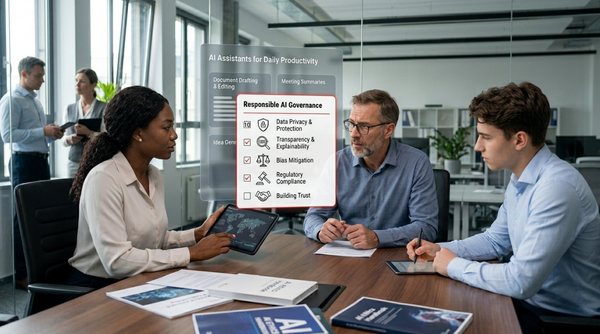
As AI adoption grows, so does the importance of using it responsibly. Businesses should consider:
Data privacy and protection
Transparency in AI usage
Avoiding biased or inaccurate outputs
Compliance with regulations
Building trust with customers requires responsible handling of data and clear communication about how AI is used.
How Small Businesses Should Approach AI
Instead of trying to adopt every trend, focus on:
Solving specific business problems
Choosing tools that integrate with your workflow
Starting with small, high-impact use cases
Measuring results and ROI
Ensuring your team can easily adopt the tools
AI should simplify operations, not complicate them.
Final Thoughts
AI is rapidly becoming an essential part of running a modern business. However, success doesn’t come from using the most advanced tools it comes from using the right tools in the right way.
Small business owners who focus on practical AI trends automation, customer support, content creation, and data insights will gain a competitive advantage without overcomplicating their operations.
The goal is simple: use AI to work smarter, not harder.
FAQs
Do small businesses really need AI?
Yes. AI helps small businesses save time, reduce costs, and improve efficiency. It’s especially valuable for handling repetitive tasks and improving customer interactions.
Is AI expensive to implement?
Not necessarily. Many AI tools offer affordable subscription plans, and some even provide free tiers or trials. The return on investment often outweighs the cost.
What is the easiest way to start using AI in a small business?
Start with one specific use case, such as automating customer support, generating content, or scheduling appointments. Gradually expand as you see results.
Will AI replace my employees?
No. AI is designed to assist, not replace, human workers. It handles repetitive tasks so employees can focus on more meaningful and strategic work.
How do I choose the right AI tools?
Look for tools that:
Solve a clear problem
Integrate with your existing systems
Are easy for your team to use
Offer measurable results
Provide good support and documentation
Can AI improve customer experience?
Yes. AI improves response times, provides 24/7 support, and helps deliver personalized interactions, all of which enhance customer satisfaction.